Maritime Wellbeing
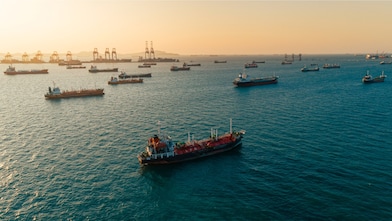
There are thousands of ships sailing on our oceans every day, playing a vital role in keeping global supply chains moving.
Yet the maritime industry continues to experience a poor safety record, with high levels of incidents—some resulting in serious injury and even suicide. We want to change this.
We do not want any seafarer to feel unsafe or miserable at work. Our ambition is a zero-incident industry where every seafarer returns home safely to their loved ones. *Research* shows that when seafarers are in good physical and mental health, and feel safe and cared for, we see fewer accidents and incidents, alongside happier, more motivated crews.
Focusing on physical and mental wellbeing and intentionally creating a culture of care and psychological safety on board, positively influences Human Performance - how people, culture, equipment, work systems and processes interact. This leads to improved engagement, productivity and safety performance, benefiting both safety outcomes and business performance.
Our research has identified five key factors that influence seafarers’ wellbeing: fatigue, the work environment, the nature of the role, socialisation and leadership. In response, the Maritime Wellbeing programme was developed to address these areas and support the creation of a safer, more resilient industry.
The programme materials have been designed for immediate use with little or no additional preparation, while also allowing companies to adapt them to complement existing initiatives. They are structured in two parts:
- Company programmes provide guidance for ship managers to develop more formalised, company-led approaches to supporting crew wellbeing.
- Shipboard programmes offer short, easy-to-deliver activities and information for use onboard vessels or during seafarer engagements such as office visits and conferences. These can be delivered as facilitated discussions, shared as general guidance, or used by individuals to support their own development.
For best results, priori to rolling out shipboard activities, ship managers are encouraged to undertake a
- undertake a *situational analysis*
- review their *wellbeing implementation plan*
- consider the *practical tips* for this programme implementation
The programme focusses on *six areas* that our research shows have the biggest impact on seafarers’ wellbeing.
| The leadership | The individual |
|---|---|
| It’s important for leaders to set a supportive tone and culture onboard, as well as have the skills to recognise issues around mental health and know how to deal with them. | It’s helpful to know how we can build our mental and emotional strength to cope better. If life feels too difficult though, it’s OK to say, “I’m not OK” and find help. When things are hard, using the support of people close to us (e.g. family, friends, colleagues etc) can make a big difference to improving mental health |
| The role | The environment |
|---|---|
| Whatever our rank, the work we do onboard (e.g. how much work we are given, the tasks we do, levels of responsibility, how we are rewarded for our work, job security etc.) can all affect our mental health – in both good ways and bad. | There are some things about life onboard that can impact our mental wellbeing but cannot always be controlled, e.g. delays to returning home, heat in the engine room, vibrations etc. To help our mental wellbeing, it is good to focus on things like food, exercise and sleep, which will make us feel healthy. |
| The team | The advocate |
|---|---|
| Being an involved member of the crew, by looking out for others to make sure everyone feels welcome and included in life onboard, can really help mental wellbeing. | To make real lasting changes, it is important that the industry works together. We are working with other organisations that are providing help and advice for seafarers and their families. Collectively, we are also delivering training, influencing regulations and ways of talking about mental health, to improve the lives of people working in the shipping industry for years to come |
Resources include practical tips, tools and strategies to raise awareness of physical and mental health, strengthen individual wellbeing, and foster a culture of care on board. They draw on independent research, insights from other safety-critical industries such as aviation and the military, and Shell Shipping & Maritime’s experience within the maritime sector. Please note that the Maritime Wellbeing programme is not a medical service, and all content is provided for information purposes only.
We all have a role to play in making our ships safer and happier places to work. Together, we can build a thriving culture of care at sea, helping ensure every seafarer returns home safely and making a meaningful difference to thousands of lives.
Legal Disclaimer
Maritime Wellbeing is not a medical organisation, and all content is provided on this website for information only. Maritime Wellbeing is not responsible for the content of external websites or resources.
Maritime Wellbeing does not accept any liability for errors or omissions in any content provided on this website. Maritime Wellbeing does not accept liability whatsoever for any loss or damage directly or indirectly arising from the use or inability to use any of the information on this website.
The content available on this website must not be used, reproduced, copied or distributed for commercial purpose.
Resources